Fleet mileage tracking: trips and odometer readings
The mileage of every vehicle, compared with the mileage set in the contract, so an overrun is seen coming before the return invoice.
Hosted in the European Union · GDPR · Flotauto 2025 Innovation Award · free up to 50 vehicles, then €6 excl. VAT per vehicle per month
Three facts about mileage tracking
- 7,980 odometer readings consolidated on the 300-vehicle demonstration account.
- Two sources of readings: automatic telematics reporting or manual entry, for vehicles that are not connected.
- The contract sits on the vehicle record: contract mileage, overrun, mileage run rate and months left, all in one place.
Why an overrun is discovered too late
- Real mileage is only read at the return: the gap appears when nothing can be done about it.
- The overrun invoice is charged by the kilometre, over the whole term of the contract, for every vehicle concerned.
- Manual readings are scattered: logbooks, emails and spreadsheets that nobody ever compares with the contract mileage.
What you get with Dadycar
Trips and odometer history feed the vehicle record. The contract is the reference, the gap becomes continuously visible, vehicle by vehicle and site by site.
Trip history
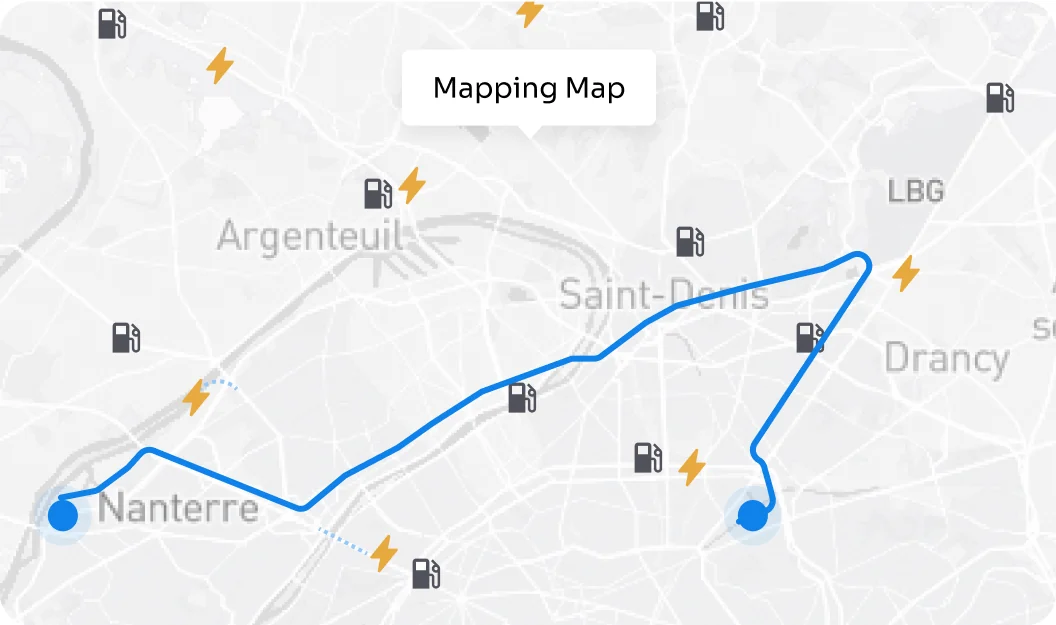
Every connected vehicle, through a GPS-OBD device or a manufacturer connection, keeps the dated history of its trips.
Odometer history
Every odometer reading for a vehicle, telematics or manual, in a single dated list.
Automatic readings with no entry
On connected vehicles, the odometer updates itself with no action from the driver or the manager.
Manual readings for the rest of the fleet
Vehicles with no device and no manufacturer connection stay tracked through readings entered by hand, dated as well.
Contract mileage and overrun
The vehicle record carries the mileage set in the contract, the overrun observed, the mileage run rate and the months left.
Run rate and end of contract
The mileage run rate set against the months left shows where the vehicle will end its contract.
How it works
- 1Import your fleet and your contracts. Contract mileage, monthly payment and end date join the vehicle record.
- 2Connect what can be connected. A GPS-OBD device or a connected OEM vehicle: trips and odometer report themselves.
- 3Track the gap and act. The overrun is read per vehicle and exported in the reports by site and by period.
Who it is for
- Fleet managers: arbitrating assignments before the contract slips (see the role page).
- SME leaders: knowing the return cost that is coming (see the role page).
- Transport and logistics: high mileages and contracts to watch closely (see the industry page).
Your fleet, compared with your contracts
Bring an extract of your lease contracts: we show where every vehicle stands against its planned mileage.
Your questions before getting started
- “Do I need a device?” Not for mileage tracking: manual readings are enough. A device or a manufacturer connection removes the data entry and adds the trip history.
- “What about driver privacy?” Trips fall under location tracking: time slots and zones frame how they are used, as the regulations require.
- “How long does it take to start?” As soon as the fleet is imported with one odometer reading per vehicle, the gap against the contract is calculated.