Solution
Fleet maintenance management with Dadycar Garage
Dadycar Garage is the maintenance module of Dadycar, the French fleet management software: a preventive maintenance plan by mileage and by date, automatic alerts, predictive maintenance by Dadycar AI, work orders sent to a network of partner garages, invoices attached to the vehicle. Our customers see up to -40 % of time spent on maintenance.
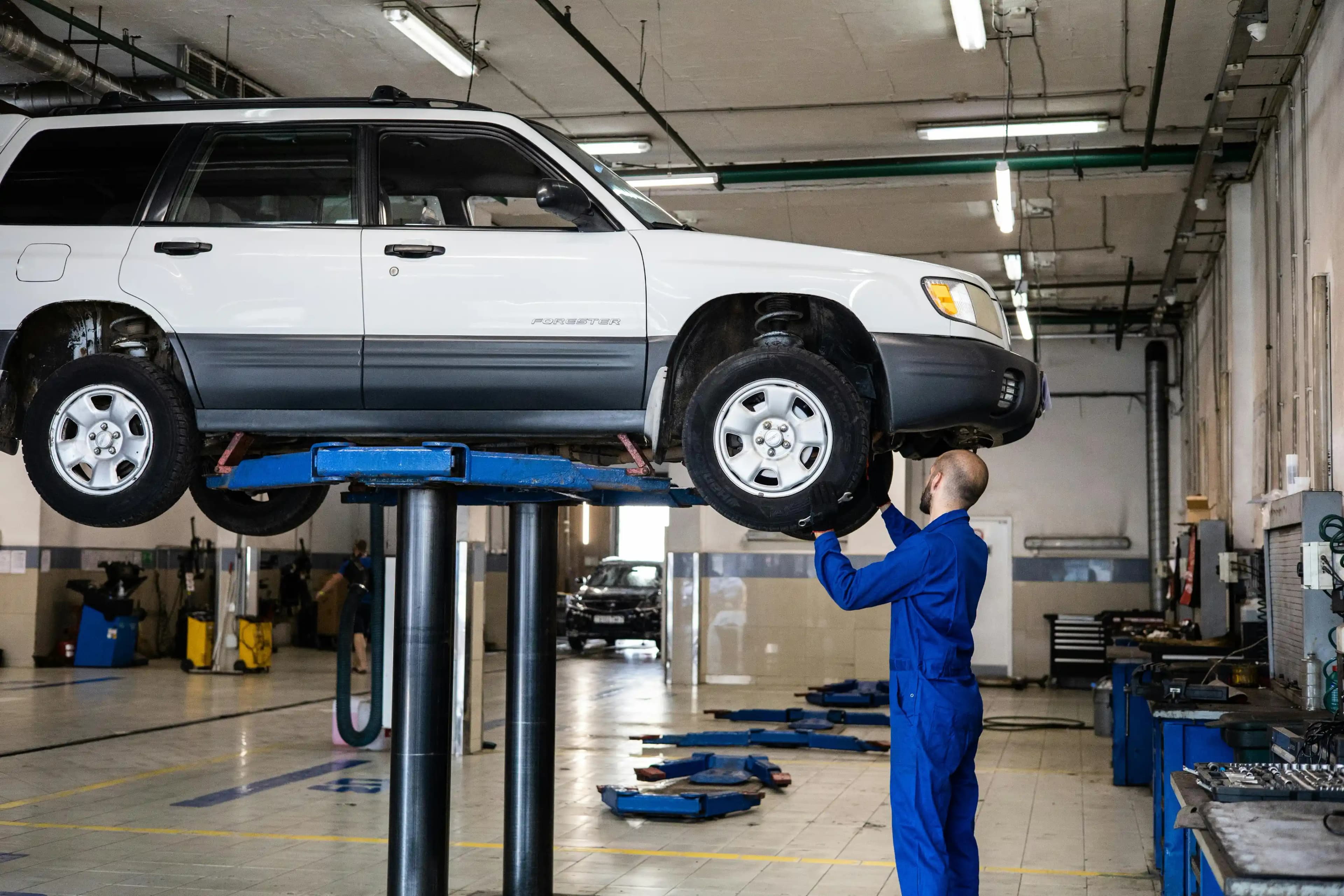
What does poorly managed fleet maintenance cost?
Maintenance is the least visible fleet cost: it is spread over dozens of invoices, days off the road and missed appointments. Run from a spreadsheet or from memory, it produces the same drift:
- Late services, which void the manufacturer warranty and turn an oil change into a repair.
- Forgotten roadworthiness tests, with a €135 fine (up to €750) and possible immobilisation of the vehicle (service-public.fr).
- Unplanned downtime: a vehicle stopped on a delivery day costs the driver’s wages and the customer delay, before the garage invoice.
- Unchecked invoices, paid without matching a quote, a planned intervention or the vehicle’s mileage.
- No view of the maintenance cost per vehicle, so no basis for deciding when to replace an ageing vehicle.
The fleet cost management glossary entry places maintenance within the total cost of ownership; the TCO calculator measures its weight on your vehicles.
How do you automate the preventive maintenance plan?
Preventive maintenance means intervening at fixed intervals, before the breakdown, according to the manufacturer’s recommendations and regulatory obligations. In Dadycar, the maintenance plan is built once and then applies automatically.
A plan per model or per vehicle
Each operation is defined with its trigger: every N kilometres, every N months, or whichever comes first. Manufacturer service, oil change, timing belt, brake pads, tyres, air conditioning, roadworthiness test, emissions inspection for vans, tachograph. A plan created for a model applies to every vehicle of that model; a vehicle can have its own rules.
Up-to-date mileage without data entry
Mileage-based triggers need reliable mileage. Dadycar receives it from three sources, depending on the vehicle’s equipment: telematics device, manufacturer data from connected vehicles, and fuel card transactions that carry the reading entered at the pump. Otherwise the driver enters the mileage in the Dadycar Go app during an inspection.
Alerts and scheduling
An alert goes to the manager, and to the driver if you wish, at a chosen lead time before the deadline (1,000 km or 30 days, for example). It creates an intervention to schedule, with the vehicle, the operation, the deadline and the suggested garage. Alerts join the anomalies and alerts queue, and deadlines appear in a downtime calendar that avoids stopping two vehicles from the same site on the same day.
How does AI-driven predictive maintenance work?
Predictive maintenance complements the preventive plan: instead of intervening at fixed intervals, it intervenes when the vehicle’s data shows a failure building up. It needs data reported from the vehicle, through a telematics device or a manufacturer integration.
Dadycar AI uses this data as follows:
- Engine fault codes: a code reported by the device or the vehicle creates an anomaly, with its description and urgency level, before the driver reports the warning light.
- 12 V battery voltage and traction battery health: a gradual weakening triggers a check recommendation before the no-start or the loss of range.
- Behaviour deviations: a vehicle that consumes more than its twins for the same use, or whose driving events multiply, is flagged for checking.
- Recommendations: Dadycar AI suggests grouping nearby operations (bringing forward an oil change during a tyre visit) and recommends replacing vehicles whose cumulative maintenance cost exceeds a set threshold.
These recommendations are decision aids; the manager validates every intervention. Details on the predictive and automated maintenance page.
How do work orders and the partner garage network work?
Work orders
A validated intervention becomes a work order: vehicle, requested operations, preferred date, location, driver contact. The order is sent to the chosen provider: in-house workshop, dealership, auto centre, tyre network or a garage in the Dadycar Garage network. The provider returns a quote, then the invoice, both attached to the order and to the vehicle. In Dadycar Go the driver sees the appointment, the address and the instructions.
The Dadycar Garage network
The Dadycar Garage network brings together partner garages, test centres and maintenance providers that receive fleet requests through the platform. For the manager: a provider near each site, quotes received in the tool, an invoice matched to the intervention. For the provider: qualified requests and a dashboard to track appointments and payments. Partnership terms are presented on the maintenance partners page.
You keep your usual providers: the network is an option, and your current garages can be added as providers in Dadycar.
Repairs following an accident go through the same circuit, attached to the file described on the claims and fines management page.
What are the roadworthiness test obligations for a fleet?
The roadworthiness test is the most regulated deadline of the maintenance plan. For passenger cars and vehicles under 3.5 tonnes, the first test takes place in the six months before the fourth anniversary of first registration, then every two years (service-public.fr, roadworthiness test). Light commercial vehicles are also subject to an additional emissions inspection between two periodic tests. Heavy goods vehicles and passenger transport vehicles follow their own annual calendar.
| Vehicle | First test | Following tests | Additional inspection |
|---|---|---|---|
| Passenger car (M1, ≤ 3.5 t) | 6 months before the 4th anniversary | Every 2 years | No |
| Light commercial vehicle (N1, ≤ 3.5 t) | 6 months before the 4th anniversary | Every 2 years | Emissions, between two periodic tests |
| Heavy goods vehicle, passenger transport | Specific calendar | Annual | By category |
Dadycar calculates these deadlines from the date of first registration and the category, records the result of each test (pass, retest), attaches the report to the vehicle record and alerts before the deadline. Related obligations are detailed in the article on fleet roadworthiness and emissions inspections and in the fleet compliance glossary entry.
How do you track maintenance costs per vehicle?
Each maintenance invoice is attached to a vehicle, an operation and a provider. From this Dadycar derives:
- the maintenance cost per vehicle and per kilometre, compared with the average for vehicles of the same model and age;
- the cost per type of operation (tyres, brakes, services, repairs, bodywork) and per provider, to renegotiate rates or change supplier;
- days off the road per vehicle and per cause;
- the cumulative cost curve of each vehicle, which shows when replacement becomes cheaper;
- the quote / invoice gap per provider.
These indicators are available in the custom reports and in the dashboard. They feed the total cost of ownership shown in operational expense management.
Dadycar customers see up to -40 % of time spent on maintenance and up to -70 % of reporting time. The effect on invoice amounts depends on the starting point and on the use of the network.
The Services and Dadycar Garage module is included from the Pro plan, billed per vehicle per month (pricing page).
See Dadycar Garage on your own maintenance plan
A 30-minute demonstration with your vehicles and your providers, or a free trial on your own fleet.
Frequently asked questions
By defining a preventive maintenance plan per model (services, tyres, roadworthiness test) triggered by mileage or date, receiving alerts before each deadline, and attaching every intervention and every invoice to the vehicle. Dadycar Garage automates these three steps and adds predictive maintenance.
For a car or a van under 3.5 tonnes: a first test in the six months before the fourth anniversary of registration, then every two years. Light commercial vehicles also have an emissions inspection between two tests. If forgotten, the fixed fine is €135.
Preventive maintenance intervenes at fixed intervals (mileage or date), according to the manufacturer and the regulations. Predictive maintenance intervenes when the vehicle’s data (fault codes, battery, consumption) announces a failure. Dadycar combines both: the preventive plan applies to every vehicle, prediction is added for connected vehicles or those fitted with a device.
No. You can register your usual providers and send them the work orders. The Dadycar Garage network is a useful option when you need a provider near a site, or to receive quotes and invoices directly in the tool.
From the telematics device, from manufacturer data of connected vehicles, from fuel card transactions (which carry the reading entered at the pump) or from a driver entry in the Dadycar Go app. Several sources can coexist; Dadycar keeps the most recent and flags inconsistencies.